

Gear Manufacturing: Technologies, Tolerances, and Industrial Applications
Gears are the absolute foundation of modern mechanics. From miniature gear wheels in precision timepieces to massive transmissions in heavy construction machinery and wind turbines – wherever reliable power and torque transmission is required, we find various types of gear drives. However, for a gear system to operate smoothly, quietly, and reliably for many years, the manufacturing process of the gears themselves must be carried out with the utmost precision, using appropriate machining technologies and strict quality standards.
At DWJ Toolroom, we possess specialized expertise in gear manufacturing. In this article, we take a closer look at the secrets of this process – from selecting the right tooth-cutting method, through the critical role of tolerances, to the importance of surface finishing for the final component’s lifespan.
Generating the Involute Profile – An Overview of Key Machining Methods
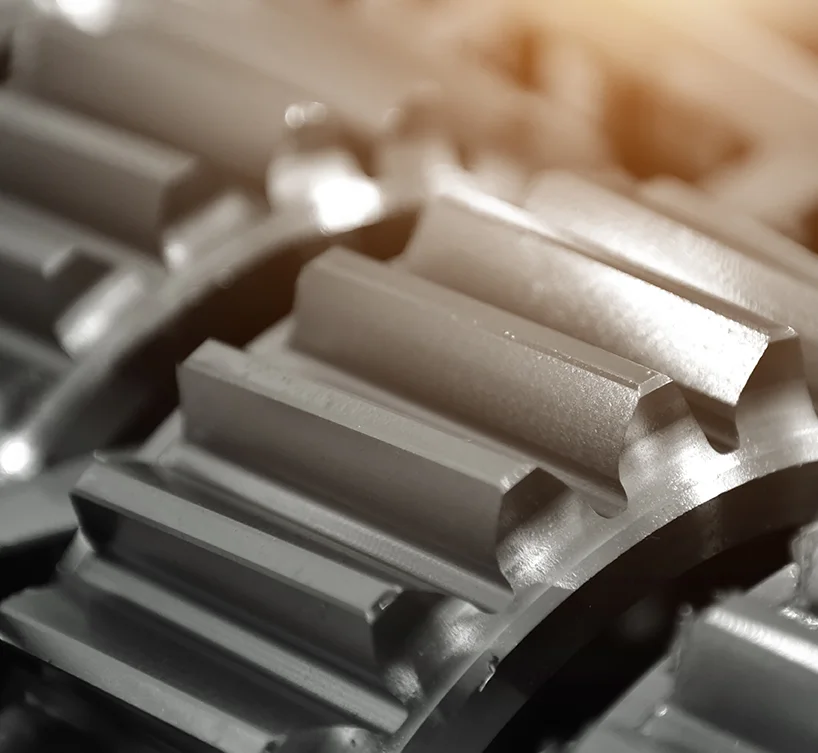
Gear manufacturing is much more than standard CNC milling or turning, although these processes often serve as a preliminary step to machining the actual gear tooth profile. The key lies in achieving the perfect shape of the involute curve (the curve forming the tooth flank profile), which guarantees smooth and slip-free engagement of mating gears.
Today, several primary gear-cutting technologies dominate the industry, selected based on the gear geometry, batch size, and required accuracy class:
1. Hobbing (Continuous Generating Milling)
This is by far the most popular and versatile method for manufacturing spur and helical cylindrical gears, as well as worm wheels. The cutting tool used here is a hob, shaped similarly to a screw with cut flutes. During machining, both the tool and the workpiece rotate in strict synchronization, simulating the engagement of a gear with a rack (or a worm).
Hobbing is a continuous, highly efficient process that guarantees high repeatability, making it the ideal choice for both single-piece and high-volume production.
2. Gear Shaping and Slotting (Fellows and Maag Methods)
This technique is indispensable where hobbing fails – for instance, when cutting internal gears, stepped/cluster gears positioned close together on a single shaft (where there is insufficient clearance for the hob runout), and in the production of gear racks.
The tool in this method is a specialized gear-shaped (or rack-shaped) shaper cutter executing a reciprocating motion (along the gear axis) combined with a generating rotary motion to create the involute tooth profile. At DWJ, gear shaping is a key capability within our production portfolio, enabling us to fulfill complex and non-standard orders.
3. Form Milling and Alternative Methods
When manufacturing bevel gears, specialized machines are used to cut teeth that taper toward the apex. Meanwhile, for prototyping or generating custom profiles in single-piece quantities, universal 5-axis CNC milling machines equipped with specialized CAM software, or high-precision Wire Electrical Discharge Machining (WEDM), are increasingly utilized.
Tolerances in Gear Transmissions – Where Millimeters Are Simply Not Enough
In gear manufacturing, precision directly translates into the acoustics and operational lifespan of the entire system. Excessively loose fits lead to backlash, noise, and accelerated tooth edge wear, whereas overly tight fits can result in overheating, inadequate lubrication clearance, and eventual transmission seizure.
Standards governing gear accuracy (such as ISO 1328) define quality classes (typically from 1 to 12, where 1 represents the highest laboratory precision). Classes 5 to 7 are standard for demanding industrial, automotive, and machinery applications.
Rigorous quality control verifies parameters such as:
- Profile and Helix Deviation: Ensuring the actual involute shape and tooth alignment perfectly match the theoretical CAD model.
- Pitch Error: Confirming that the spacing between individual teeth is uniform around the entire circumference.
- Radial Runout of the Gear Ring: Which must be minimized to eliminate vibrations during operation.
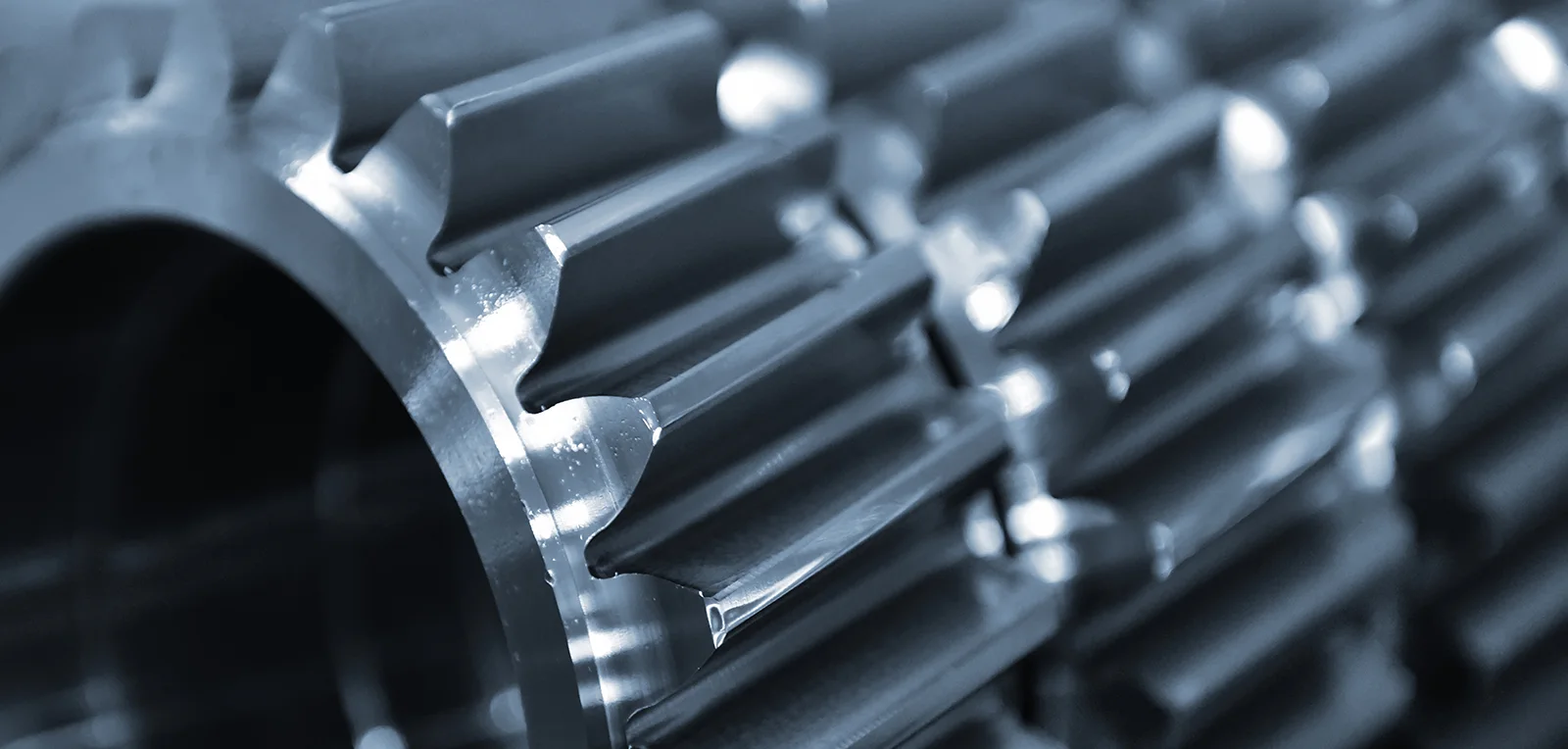
To achieve the highest accuracy classes and eliminate microscopic deformations caused by heat treatment (as well as initial cutting), tooth flank grinding is performed after hardening. Grinding guarantees smooth tooth flanks, drastically reducing friction and increasing load-bearing capacity.
Heat Treatment and Thermo-Chemical Treatment – Hardness Where Needed
Precise machining on soft, unhardened stock material is only part of the process. Gears must withstand immense forces, which makes imparting the appropriate mechanical properties crucial. This is where heat treatment comes into play, serving as another key pillar of DWJ Toolroom’s capabilities.
- Hardening (often induction hardening): A process aimed at significantly increasing the surface hardness of the gear teeth to protect them against abrasive wear, while leaving a tough, ductile core that resists fatigue and cracking under impact loads.
- Carburizing and Hardening (Case Hardening): The most widely used method for high-quality low-carbon gear steels. It creates an exceptionally hard, wear-resistant outer layer alongside outstanding fatigue strength for the entire gear body.
- Nitriding: An alternative method that hardens the surface layer without subjecting the component to high heat quenching temperatures. This significantly minimizes thermal distortion, which can be an issue when hardening large-diameter gear rings.
Selecting the correct material and heat treatment technique is a complex decision that considers the type of load, operating temperature, and required operational lifespan of the drive mechanism.
From Chamfering to Protective Surface Coatings
The final, yet equally essential stage of gear production is finishing. Every manufactured component must have its edges deburred. Precise tooth chamfering is critical – sharp edges act as natural stress concentration points where micro-cracks can initiate, leading to catastrophic failure of the entire gear train. Furthermore, removing sharp burrs is vital for safe assembly and prevents damage to mating mechanical components.
Depending on the operating conditions (e.g., high dust exposure, aggressive chemical environments, or the need for improved sliding properties), the finished gears undergo surface finishing processes. This includes black oxide finishing (blackening) for basic corrosion resistance and a clean visual finish, electroplating, or advanced DLC (Diamond-Like Carbon) coating application.
At DWJ Toolroom, we offer a comprehensive approach to gear manufacturing. From precise gear blank turning and various tooth cutting options (including specialized gear shaping) to final heat treatment. Our experience in both single-piece and series production allows us to optimize costs while ensuring compliance with strict accuracy standards, without which smooth and reliable drive operation would be impossible.