

Metalworking – a comprehensive guide to technologies, processes and innovations
For millennia, the development of civilization has been closely linked to our ability to shape raw materials. Today, metalworking is the absolute foundation of every sector of the economy – from construction and energy, through the automotive industry, to advanced aerospace, space, and medical technologies. In the era of Industry 4.0, where micrometric precision and time play a key role, traditional manual methods are giving way to modern numerically controlled technologies.
In this article, we will take a closer look at what metalworking essentially is, what its main types are, which materials are most frequently processed, and how technological innovations are changing the face of modern production floors.
What exactly is metalworking?
In the broadest engineering terms, metalworking is the entirety of technological and physicochemical processes whose main goal is the deliberate alteration of the shape, dimensions, structural state, or properties of metallic materials (pure metals and their alloys). The final result of the entire production cycle is to obtain a part (a semi-finished or finished product for direct use) with strictly defined parameters, which must be 100% compliant with technical documentation and rigorous quality standards.
Depending on whether engineers want to radically change the shape of an entire steel block, cut off only a minimal excess of material, or increase the resilience and strength of a gear’s surface, a completely different technology is selected. An in-depth understanding of individual processes is crucial for optimizing production costs for any company relying on metal components.
Main types of metalworking – technological division
Materials engineering, mechanics, and machine building technology distinguish four main categories of shaping and modifying metallic materials. Each of them plays a different role in the product lifecycle.
Subtractive manufacturing (machining) – precision at the micrometer level
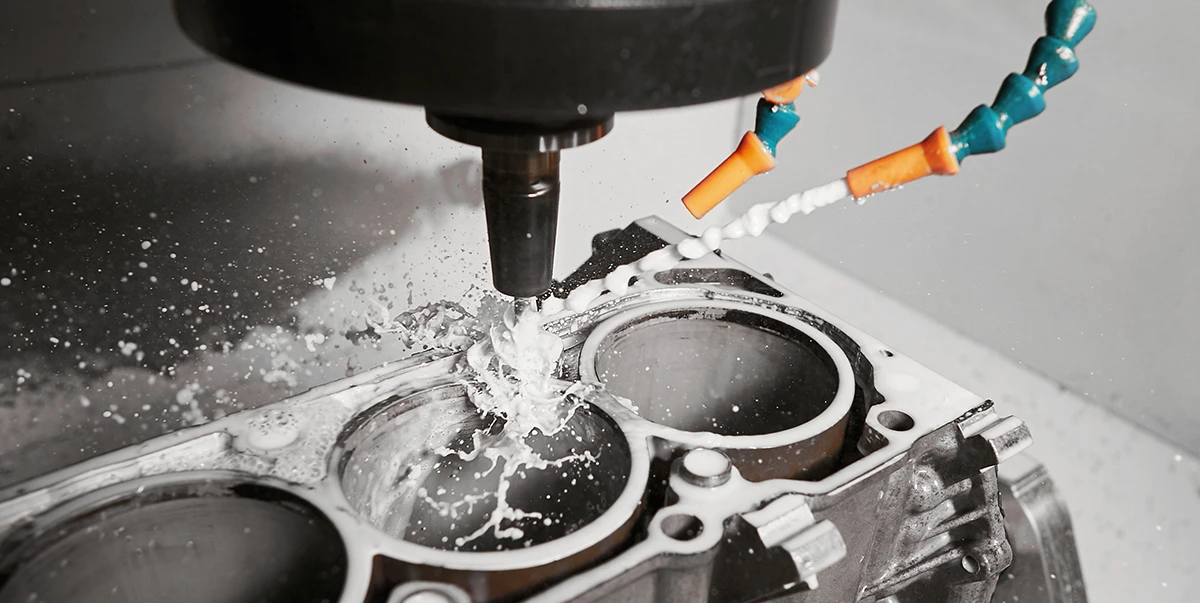
Machining is undoubtedly the most popular and widely used method in the world, commonly associated with the generation of chips. This process involves the successive, forceful removal (cutting) of material layers, known as allowance, until the desired solid shape is achieved. Today, CNC (Computer Numerical Control) metalworking dominates here, guaranteeing excellent repeatability. In this category, we distinguish primarily:
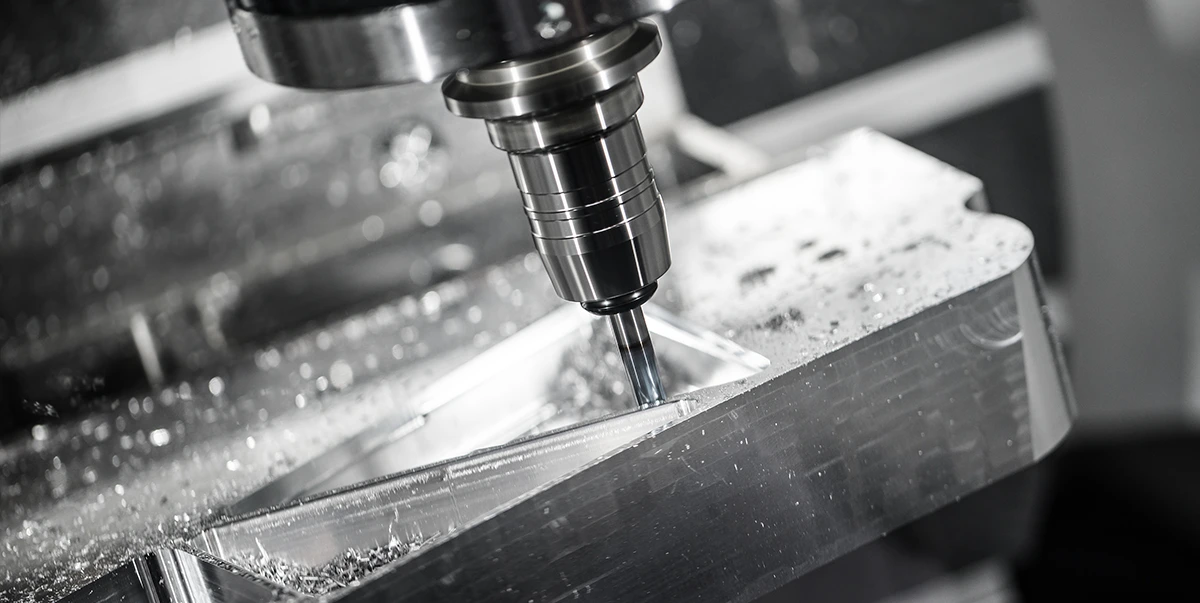
- Milling: A process in which a multi-point tool (milling cutter) performs the main rotary motion, and the workpiece moves relative to it in a linear feed motion. Milling machines are excellent for creating complex 3D solids, grooves, gears, or flat surfaces.
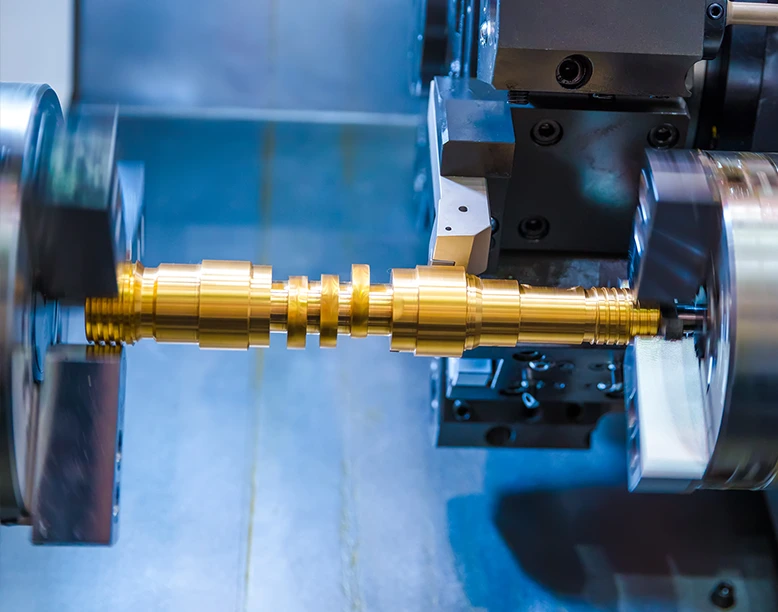
- Turning: The mechanical opposite of milling. Here, the workpiece material (e.g., a steel rod or tube) rotates in a chuck at high speed, while a stationary single-point lathe tool gradually removes subsequent layers from it. Lathes are irreplaceable for creating rotary solids: shafts, pins, sleeves, or threads.
- Grinding, polishing, and lapping: Typical finishing processes. They use abrasive tools (e.g., cemented carbide or diamond grinding wheels) to remove microscopic layers of material. They guarantee the highest possible surface smoothness and extreme dimensional accuracy.
- Drilling and reaming: Creating, enlarging, or modifying (e.g., counterboring) cylindrical holes.
Metal forming – shaping under immense force
Unlike machining, metal forming takes place without material loss (or it is completely marginal). It utilizes a unique property of alloys called plasticity – the ability to permanently deform under the influence of huge external forces without cracking and losing cohesion. It can be carried out cold or hot (after exceeding the so-called recrystallization temperature).
- Forging: The oldest method (dating back to ancient blacksmiths), today carried out in automated forges by powerful hydraulic presses and drop hammers. It changes not only the shape but also optimizes the internal structure (aligns the fibers) of the metal, making it exceptionally resistant to cracking.
- Stamping: A method widely used in the mass production of car bodies, aluminum cans, or home appliance casings. It involves shaping thin sheets using appropriately profiled dies and punches.
- Bending: A permanent change in the curvature of the element’s axis without changing its cross-section. Used primarily for pipes, wires, and thin sheets of metal using press brakes.
- Rolling: Squeezing the metal passing between rotating rolls. Very often used in steelworks to create structural profiles, reinforcing bars, and metal sheets.
Heat treatment – invisible change, powerful effect
It happens that a manufactured part already has the perfect and final shape, but due to its properties, it is too soft (e.g., it would quickly blunt as a blade) or too brittle (it would break upon impact). Then heat treatment comes into action, involving the cyclical heating and cooling of the alloy in precisely controlled conditions, which modifies the arrangement of atoms.
- Hardening (Quenching): Rapid cooling of a red-hot part (most often submerged in cold water, special oil, or cooled by an air stream). It radically increases hardness and wear resistance, but unfortunately also increases the brittleness of the material.
- Tempering: A process performed almost always right after hardening. It involves reheating the element, but to a much lower temperature, which reduces the brittleness caused by hardening and releases accumulated internal stresses.
- Annealing: Very slow heating and equally slow cooling (often the part cools together with the furnace for many hours). This softens the material and homogenizes its structure, significantly facilitating its subsequent machining.
Chemical and thermochemical treatment – an external protective shield
These are the processes that form the absolute culmination of the work, aimed at saturating the surface layer of the part with specific, additional elements or forcing desired reactions on the surface itself. Thanks to this, the core of the metal element remains flexible, and its surface gains unique protection and appearance.
- Carburizing and nitriding: Saturating the top surface of the steel with carbon or nitrogen, respectively. The result? A drastic increase in surface hardness, the highest resistance to mechanical galling and corrosion.
- Siliconizing and chroming: Saturating the surface with silicon at very high temperatures makes the part resistant to acids and extreme temperatures, while chroming (apart from purely aesthetic reasons) provides excellent protection against rust.
- Galvanization (Electroplating): Electrolytic application of incredibly thin coatings of other metals (e.g., popular zinc plating), protecting the base material from oxidation and rusting.
- Anodizing: An extremely important electrochemical process, dedicated mainly to aluminum alloys. It involves the artificial, controlled creation of a thick layer of aluminum oxide on the surface of the part. Anodizing not only drastically increases resistance to corrosion and mechanical damage but also allows the element to be permanently colored in almost any color (commonly used in electronics, the automotive industry, or sports equipment manufacturing).
- Blackening (Black oxide): A process consisting of covering the surface of steel parts with a thin, black layer of oxides (most often in special chemical baths). Blackening does not affect the dimensions of the workpiece, while at the same time improving aesthetics, providing basic anti-corrosion protection, and effectively eliminating light reflections (which is crucial in optical elements, precision machinery, and the defense industry).
Modern metalworking and Industry 4.0
Today’s metalworking differs drastically from what we remember from two or three decades ago. Classic, manually operated lathes and milling machines have given way to multi-axis CNC machining centers. It is computers, working based on three-dimensional CAD/CAM models, that dictate the terms today, ensuring accuracy measured in thousandths of a millimeter.
But that’s not all. The Industry 4.0 trend introduces advanced automation to production floors. Industrial robots autonomously load raw material and remove finished parts from machines, enabling so-called “lights-out” manufacturing (third-shift production in the dark, without direct human supervision). Artificial intelligence is also increasingly involved in machining, capable of monitoring vibrations and tool wear, preventing failures (predictive maintenance) and minimizing downtime.
What materials are most commonly processed?
Every metal alloy has different machinability and physical properties, which determines the use of specific tools and process parameters:
- Carbon steel and stainless steel (INOX): Extremely versatile, used from reinforcement in construction to the sterile food and pharmaceutical industries. They can be hard and require efficient, high-temperature resistant cutting tools.
- Aluminum and its alloys: Appreciated for their incredible lightness, corrosion resistance (thanks to passivation, as well as the aforementioned anodizing), and excellent, fast machinability. It is the foundation of the aerospace industry and modern automotive industry.
- Brass and copper: Valued primarily for excellent electrical and thermal conductivity as well as aesthetic qualities. Common in broadly understood electronics, plumbing/installations, and interior decoration.
- Titanium and superalloys: Extremely demanding, difficult to machine, and expensive. They are, however, irreplaceable where the project requires extreme, armor-like strength combined with low mass (medical bone implants, advanced space industry, defense sector).
Why does professional metalworking tolerate no compromises?
The choice of the appropriate manufacturing and part modification technology depends on dozens of factors: production batch size (from prototype parts to production in millions of pieces), dimensional tolerance requirements, specified surface roughness, right down to the assumed budget and lead time. An incorrectly planned process at any of these stages is a guarantee of wasted time, damage to expensive raw materials, and a significant reduction in the quality of the final product.
This is exactly why processes such as innovative metalworking should be entrusted to experienced experts. At DWJ Narzędziownia CNC , we perfectly understand that the final success of your product or the entire mechanical system depends directly on precise details. Our team of engineers efficiently combines years of industry experience with the impressive capabilities of a modern machinery park.
Regardless of whether you need one-off, extremely precise milling of titanium components, lossless tube bending, professional aluminum anodizing, or serial turning of steel screws – we have the competencies to meet any engineering challenge. We always tailor our solutions to the individual specifics of your industry.
Understanding the potential of metalworking is the first step to market success. Take the next one and contact our technological department. We will analyze your project, suggest the best technological methods, and prepare a transparent quote. Trust the specialists from DWJ Narzędziownia and optimize your production today!