

From Prototype to Production Run — How to Prepare a Part for Repeatable Manufacturing?
A working prototype confirms that a design can be put into practice. However, producing a single correct part is only the beginning. When manufacturing dozens or hundreds of units, dimensional repeatability, predictable costs, and smooth fulfillment of subsequent orders also matter. How do you prepare a part for CNC serial production?

1. Inspect the prototype and document your findings
A prototype allows you to evaluate assembly, fit with other components, and part behavior under operating conditions. Before ordering a production run, it is worth verifying:
- whether the component fits without manual adjustment;
- whether holes and mounting surfaces are properly positioned;
- whether the material withstands the anticipated loads;
- whether any damage or excessive wear occurred during testing.
2. Prepare consistent documentation
A 3D model defines geometry, but does not always include all manufacturing requirements. The technical drawing should complement it with the information needed to produce and inspect the part.
Before handing over the project, ensure the following are specified:
- material grade and condition;
- dimensions, tolerances, and critical surfaces;
- required surface roughness and edge finishing requirements;
- any heat treatment or surface coatings;
- part number and documentation revision level.
The 3D model and 2D drawing must reflect the same part revision. Clearly marking revisions reduces the risk of producing subsequent orders based on outdated designs.
3. Adapt the design for manufacturability
A part that can be manufactured as a one-off is not always economical in serial production. Therefore, before launching production, it is worth discussing the design with your CNC machining partner.
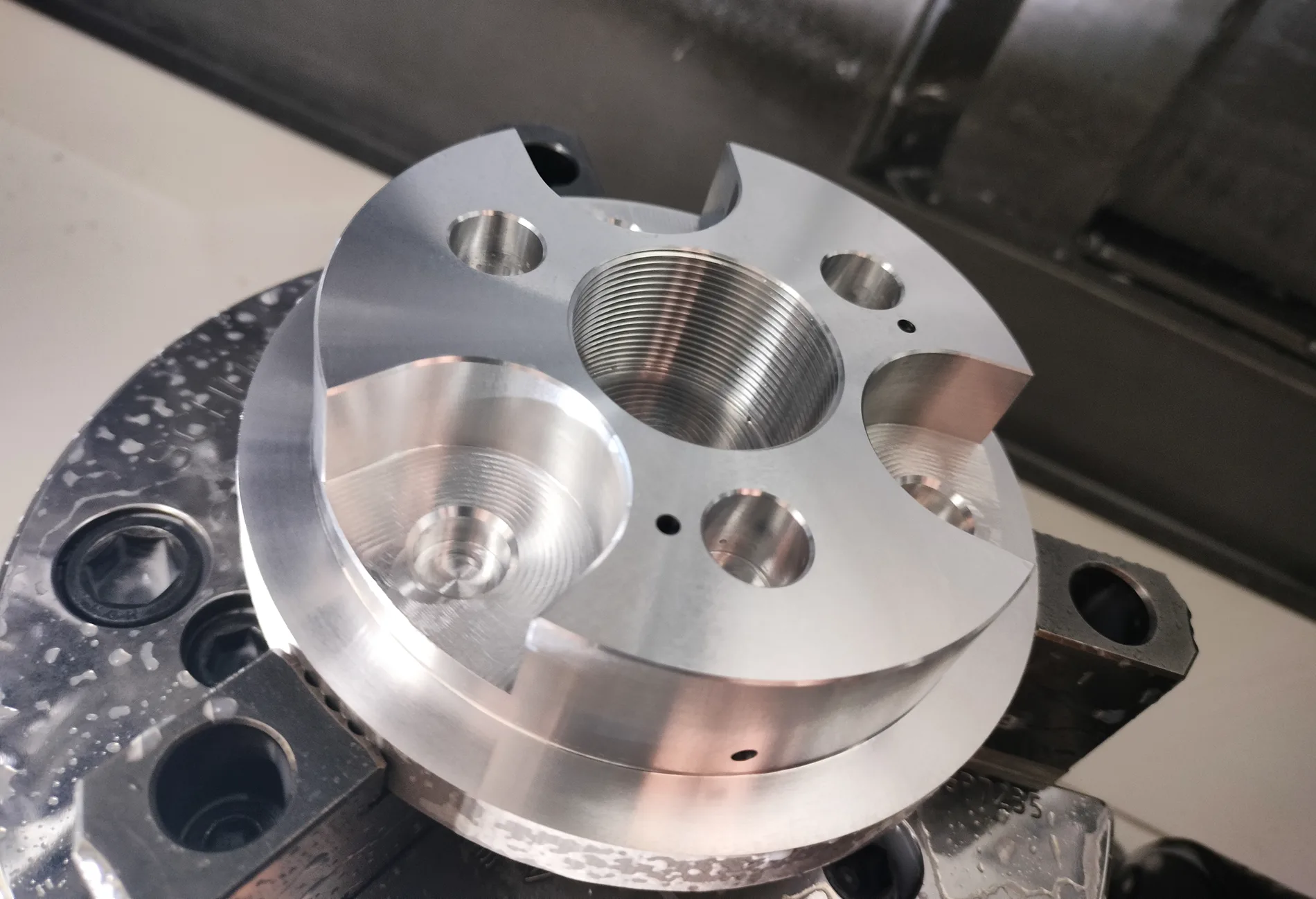
Deep pockets, small corner radii, thin walls, and hard-to-reach holes require special attention. The ability to securely clamp the workpiece is equally important.
Similarly, tolerances should be analyzed carefully. Tight tolerances should only be applied where strictly necessary. Imposing them across all dimensions can unnecessarily drive up manufacturing and inspection costs.
4. Confirm the material and sequence of operations
If the prototype was made from an alternative material, testing it does not automatically validate the properties of the final component. Before volume production, the production material and policies regarding acceptable substitutes must be agreed upon.
The complete process must also be mapped out: turning, milling, and any post-processes such as hardening, grinding, or coating. Dimensional and surface finish specifications must clearly define the final, finished part. This ensures secondary operations are accounted for right from the production planning phase.
5. Run a pilot batch
A pilot batch helps verify whether the chosen manufacturing process yields consistent parts across multiple units.
At this stage, it is advisable to:
- Inspect critical dimensions and surface finish.
- Perform a test assembly.
- Evaluate component performance.
- Sign off on documentation prior to placing a larger order.
If parts require manual rework, determine the root cause first. Correcting the design or process prior to full-scale production prevents duplicating the issue across the entire batch.
6. Define quality control and ongoing deliveries
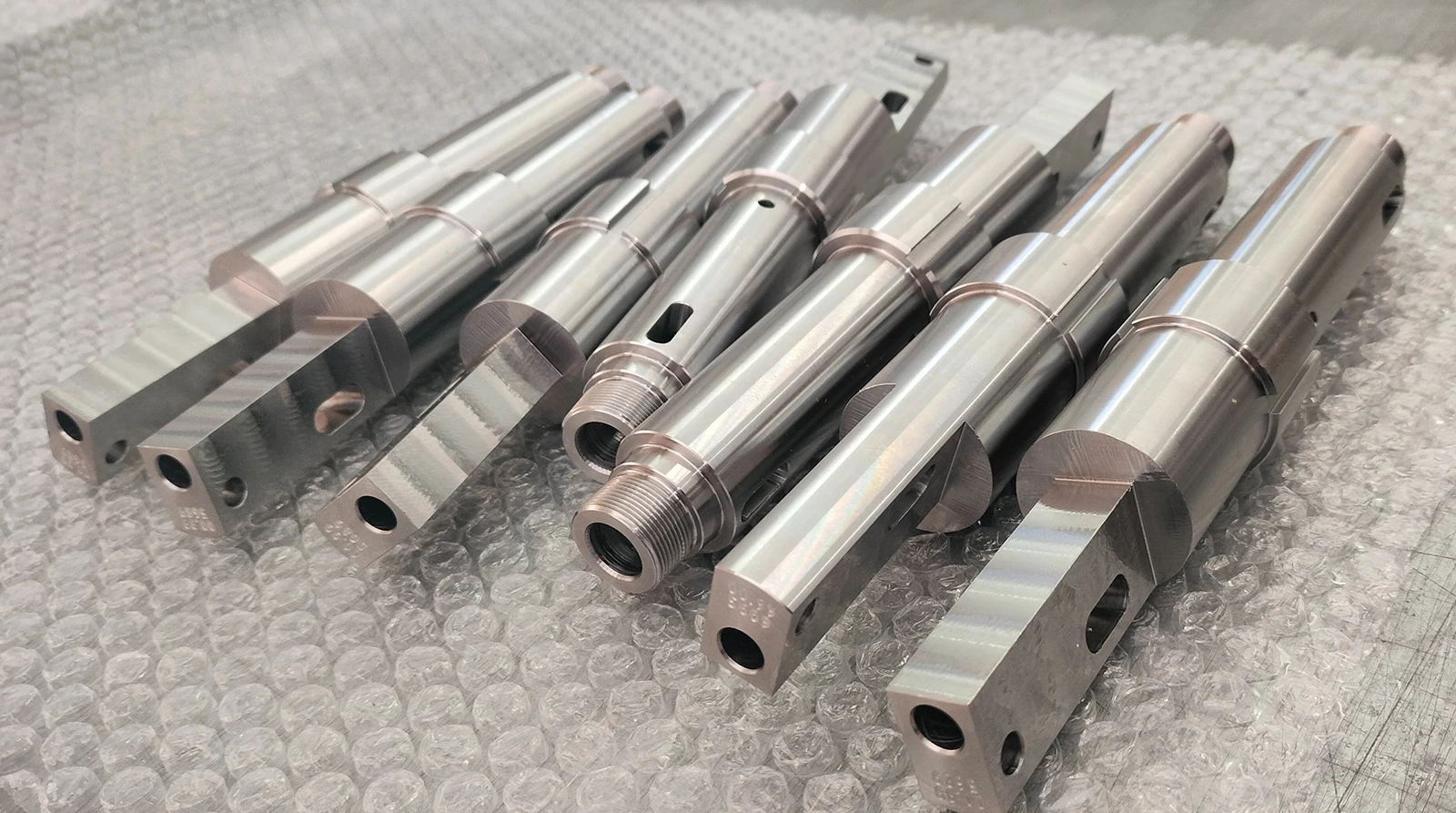
Repeatable manufacturing requires clear acceptance criteria. Agree with your supplier on the scope and frequency of inspections as well as required documentation. Particular attention should be paid to features governing safety, assembly, and part operation.
It is also worth agreeing on batch sizes, delivery schedules, part marking, and packaging requirements.
The unit cost of a prototype does not directly translate into production run pricing. Across higher quantities, setup costs—such as programming, tooling, and fixturing—are distributed over more parts.
From the First Part to Production Runs with DWJ
DWJ Toolroom provides one-off and serial production of metal parts and plastic components.
Planning to launch a production run?
Send DWJ your current drawings, 3D models, material specifications, quantities, and target delivery dates. Include prototype testing feedback so we can discuss manufacturing subsequent batches based on a proven design.